Pillar II — Group Dynamics
Deindividuation.
The loosening of self-awareness and personal accountability in a crowd or anonymous setting, freeing behaviour normally constrained by identity and consequences.
01Overview
Deindividuation describes what happens when the self vanishes into the collective: anonymity, arousal, and shared focus dissolve the reflective checkpoints that normally moderate behaviour. It is not a simple release of savagery — modern research shows crowds switch from personal identity to social identity, acting on the norms of the group rather than on no norms at all. Anonymity therefore amplifies whatever the situation legitimises: generosity in a hugging mob, cruelty in a hunting one, and coordinated hostility in an online swarm.
02Key theorists
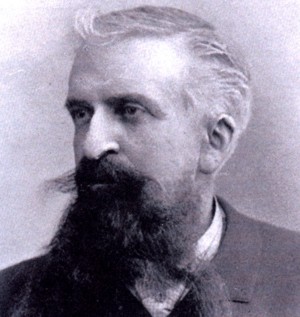
01Gustave Le Bon (1895)
02Leon Festinger et al. (1952)
03Philip Zimbardo (1969)
04Stephen Reicher et al. (1995)
Le Bon's 1895 crowd psychology described the mob as a melting of individual minds into a collective one. Festinger, Pepitone and Newcomb reframed it in 1952 as a loss of inner restraints; Zimbardo's 1969 experiments linked anonymity to antisocial behaviour. Contemporary SIDE-model research substantially revised the story: deindividuated crowds act on shifted social identities, not on an absence of self — which is precisely why online anonymity can produce both charitable and venomous behaviour depending on the crowd's norms.
03How it works
- 01Anonymity: being unidentifiable before the crowd reduces the imagined personal cost of action
- 02Reduced self-awareness: attention shifts outward from the self onto the collective
- 03Diffusion of responsibility within the crowd
- 04Group identity override: local norms replace personal standards as the dominant guide
- 05Arousal and shared focus: noise, movement, and synchronised attention intensify the shift
04Where it shows up
Online pile-ons where ordinary people post threats they would never utter under their own names; stadium scenes, street crowds, and corporate mobbing where individuals behave as members of something else; the well-documented transformation of witnesses into participants when they believe no one can single them out.
05The propaganda link
Anonymous denunciation — the Two Minutes Hate, the windowless ministry, the faceless informer — uses deindividuation as a management technique: when no one is an individual, loyalty and cruelty both become crowd functions rather than personal choices.
06How to resist
- Reduce anonymity where it is optional: persistent identity and visible comments in online spaces
- Restore reflection: cooling-off periods and pause prompts before posting or acting in a crowd
- Make the target vivid and human — individuation reverses the effect reliably
- Shift the crowd's norms explicitly: visible moderation and leadership change what the group believes is expected