Pillar III
Political Psychology, Rhetoric & Power.
The machinery of persuasion, propaganda, and manufactured consensus — how language is weaponised to move crowds, dissolve dissent, and launder power into legitimacy.
17 entries ·search the index →
100+ found this interesting
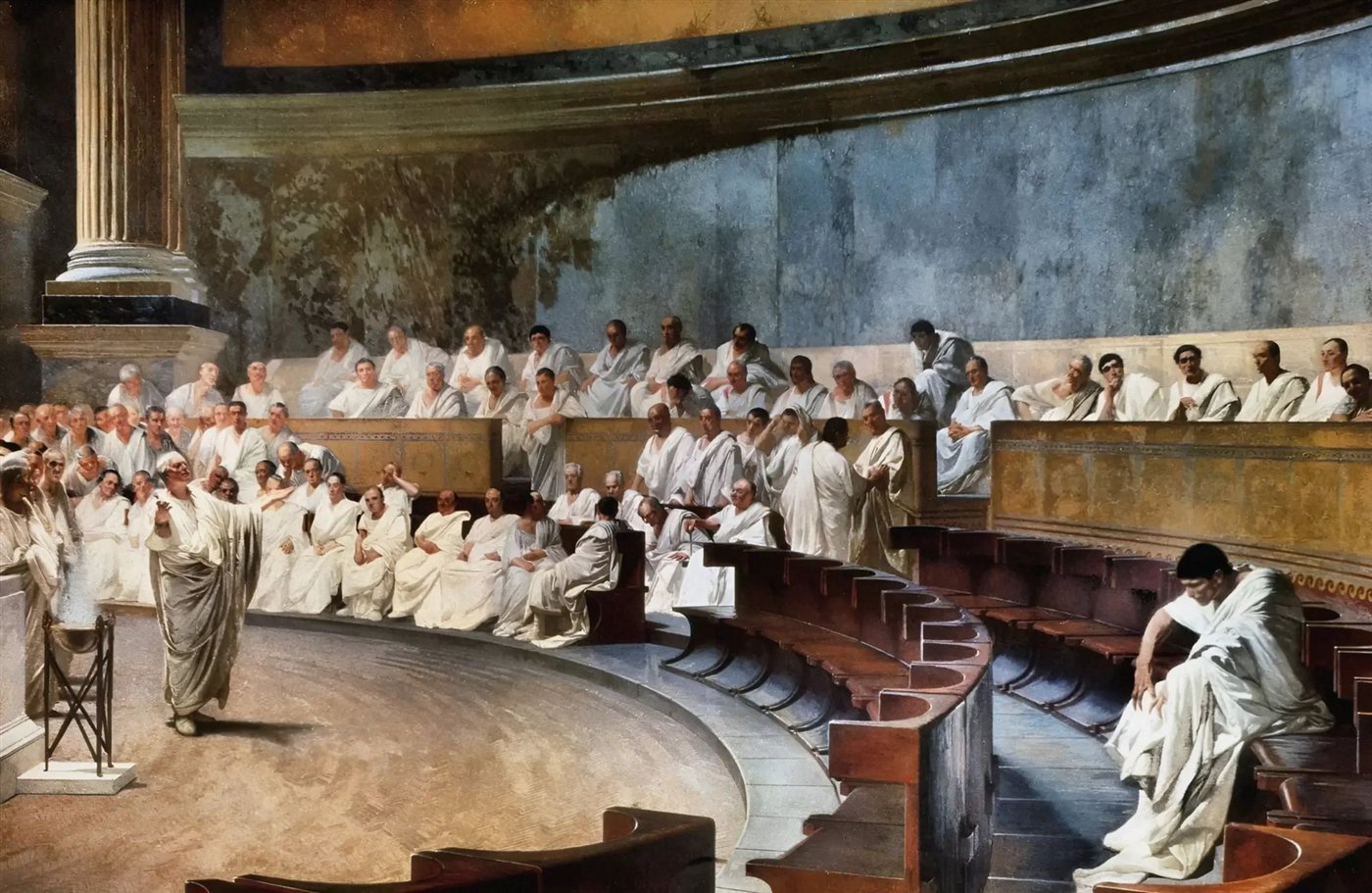
Demagoguery
A style of political leadership that seeks power by inflaming passion, prejudice, and fear rather than by persuading through argument — treating the crowd's emotions as the medium of rule.
- #Populism
- #Persuasion
- #Leadership
75+ found this interesting
Sophistry
The use of plausible-sounding but fallacious reasoning to win an argument rather than reach the truth — persuasion practised as a technique of power, detached from knowledge.
- #Rhetoric
- #Fallacies
- #Bad-Faith Argument
150+ found this interesting
Doublethink
The mental discipline of holding two contradictory beliefs simultaneously and sincerely endorsing both — Orwell's name for the psychological core of totalitarian thought control.
- #Propaganda
- #Totalitarianism
- #Language
125+ found this interesting
Manufacturing Consent
Herman and Chomsky's model of how commercial media filter news to produce public agreement with elite policy — consent manufactured rather than persuaded.
- #Media
- #Propaganda
- #Free Press
75+ found this interesting
Straw Man
Refuting an argument that no one made: substituting a weakened, distorted version of the opponent's position and striking that down instead.
- #Fallacies
- #Debate
- #Misrepresentation
75+ found this interesting
Red Herring
Introducing an irrelevant but attention-grabbing point to divert discussion away from the question actually at issue.
- #Fallacies
- #Diversion
- #Attention
100+ found this interesting
Political Framing
The strategic selection and emphasis of some aspects of reality over others, to promote a particular problem definition, interpretation, and evaluation.
- #Narrative
- #Media
- #Language
150+ found this interesting
Gaslighting
A sustained campaign of reality-denial that makes a person doubt their own memory, perception, or sanity — until the manipulator's version of events is the only one left standing.
- #Manipulation
- #Reality
- #Abuse
150+ found this interesting
System Justification
People possess a deep motive to defend the existing social order — even when it disadvantages them — because the system's legitimacy is fused with their own sense of order and identity.
- #Ideology
- #Legitimacy
- #Hierarchy
150+ found this interesting
Preference Falsification
People publicly misrepresent their preferences when private honesty is dangerous — and the resulting silence protects the regime by hiding exactly how weak its support has become.
- #Authoritarianism
- #Silence
- #Public Opinion
150+ found this interesting
Panopticism
When people believe they may be watched at any time, they discipline themselves — power becomes most efficient when it no longer needs to be exercised to be obeyed.
- #Surveillance
- #Discipline
- #Power
125+ found this interesting
Milieu Control
Totalist systems control not just what people say, but the whole environment in which speaking happens — the information, relationships, and meanings available to a person are monopolised so thoroughly that rebellion cannot think itself.
- #Cults
- #Thought Reform
- #Control
150+ found this interesting
Moral Panic
A society periodically discovers a new threat to its youth and morals — an exaggerated, media-fed wave of outrage that identifies a 'folk devil' and quietly reshapes law, order, and social control.
- #Media
- #Outrage
- #Social Control
125+ found this interesting
Low-Information Voter
Voters who rationally choose not to invest in political knowledge — because a single vote rarely decides an outcome — and who rely on cues, heuristics, and group loyalty instead of policy detail.
- #Voting
- #Democracy
- #Heuristics
100+ found this interesting
Tocqueville Effect
Revolutions often begin not when conditions are worst, but when they are improving — rising expectations outpace rising conditions, and the gap becomes intolerable.
- #Revolution
- #Expectations
- #Political Instability
100+ found this interesting
Demonstration Effect
The spread of political ideas, institutions, and unrest across borders by example — one society's success or failure becomes the argument that mobilises another.
- #Contagion
- #Democratisation
- #Political Change
100+ found this interesting
Credentialism
The use of formal qualifications — degrees, licences, certifications — as the gatekeeper of entry to professions and status, often functioning to preserve class and power under the language of merit.
- #Gatekeeping
- #Class
- #Institutions
Continue through the taxonomy