Pillar II — Group Dynamics
Conformity.
The alignment of individual belief, judgement, or behaviour with a group's norms — frequently against a person's own perception and better judgement.
01Overview
Conformity is the gravitational pull of the group on the individual. It operates through two distinct engines: normative influence — the fear of rejection that makes people agree with the majority they privately doubt — and informational influence — the genuine assumption that a unanimous crowd must know something we do not. Most conformity is not cynical; it is an automatic social tuning that happens before conscious deliberation ever begins. Understanding it is the precondition for understanding almost every other entry in this archive.
02Key theorists
01Muzafer Sherif (1936)
02Solomon Asch (1951)
03Robert Cialdini (1984)
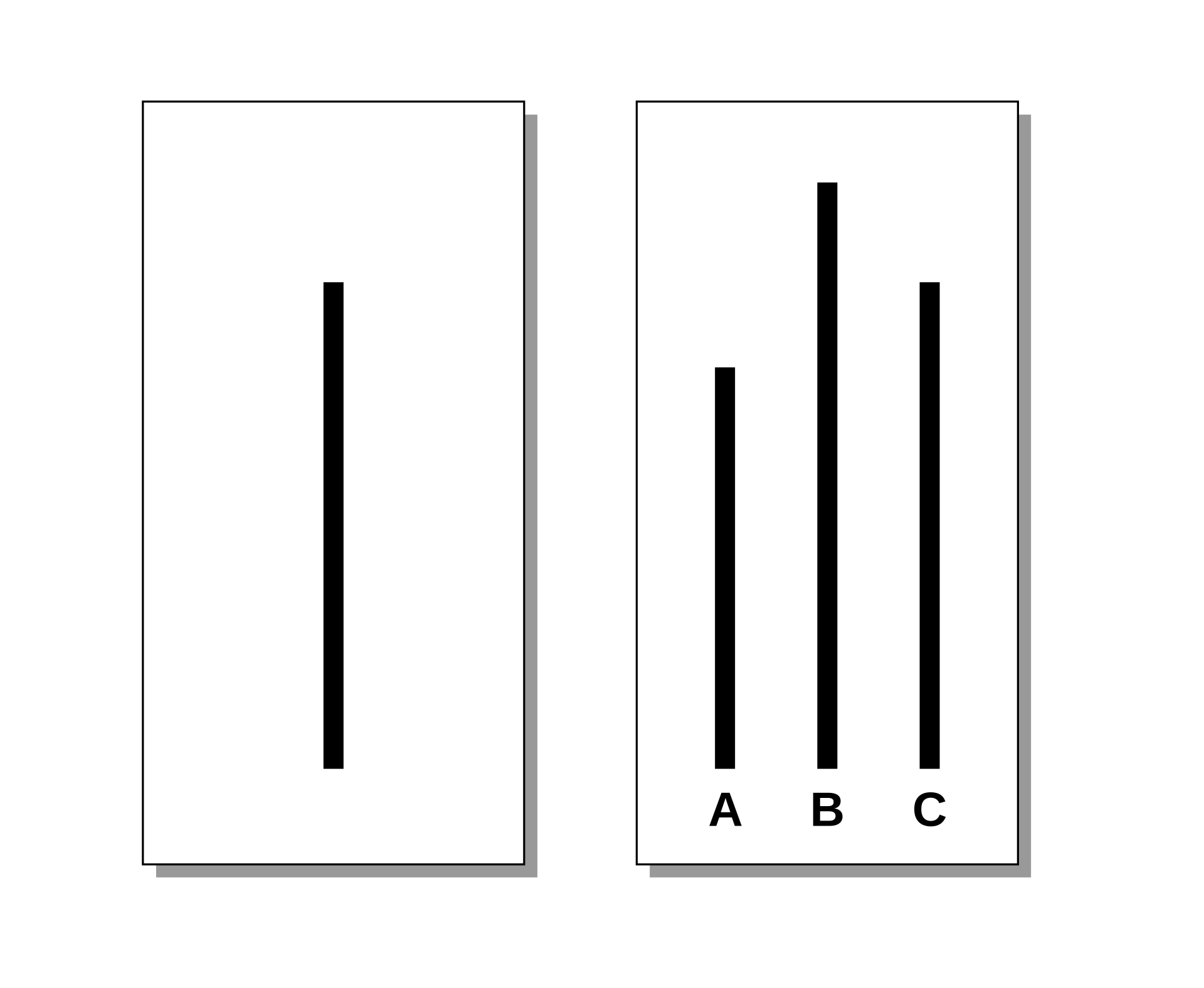
Sherif's autokinetic experiments of the 1930s showed that people facing an ambiguous stimulus quietly converge on a shared group estimate — and keep it even when later tested alone. Two decades later, Asch demonstrated the phenomenon was far more disturbing: participants shown unambiguous line lengths, seated among actors pretending the wrong line was correct, went along with the majority in roughly a third of trials. Asch's studies were read across post-war America as an answer to the question of how ordinary citizens could have drifted into totalitarianism.
03How it works
- 01Normative influence: agreeing with the majority to avoid social rejection or ostracism
- 02Informational influence: treating the crowd's consensus as evidence about an ambiguous reality
- 03Unanimity pressure: a single dissenting ally drastically reduces conformity, while a unanimous majority maximises it
- 04Difficulty and ambiguity: the less certain we are, the more the group's judgement substitutes for our own
- 05Automatic mimicry: pre-cognitive imitation of posture, tone, and opinion that precedes any deliberate decision
04Where it shows up
Boardrooms where a single sceptic falls silent as the room converges; investor manias where doubt becomes socially expensive; corporate cultures where the officially endorsed interpretation of events is repeated by people who privately hold another view entirely.
05The propaganda link
Conformity is the machinery that makes Newspeak unnecessary in practice: if reality can be revised by majority repetition, then the Party does not have to police every thought — it only has to make dissent socially unspeakable.
06How to resist
- Cultivate at least one visible ally before the deciding moment; a single dissent cuts conformity sharply
- Record your private judgement before group discussion and compare it afterwards
- Separate opinion collection from social pressure: anonymous or written first-round positions, revealed simultaneously
- Reward the accurate dissenter explicitly, so holding out carries honour rather than risk